Data I Got From my Project


The results I got from the surveys were really great. With questions using the Likert Scales where they had to rate their answers from 1 to 5, and Wilconxon Signed-Rank Test (before and after surveys), here are some results:
1) Technology knowledge increased significantly across all four classes, from an overall average of 2.71 to 3.48.
76% of participants improved on the combined knowledge/ability/confidence measures for their class.
2) AI knowledge showed the largest individual gain, increasing from 2.45 to 3.86, with 82% improving.
3) High ratings for confidence/safety-related outcomes increased nearly fivefold, from 11.9% before to 56.4% after.
4) 100% of final-survey respondents wanted continued technology education, demonstrating strong engagement and unmet demand.
5) participants mood increased by just attending my class!
Alia Gold Award Survey Detailed Results
Phone Basics: Before vs After

Brain Apps and Games: Before vs After
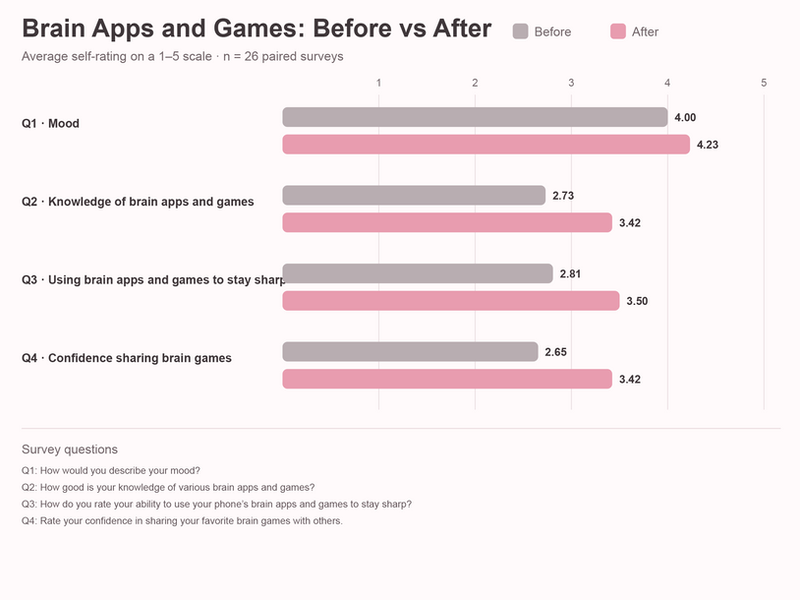
Social Media: Before vs After

Scams and AI Basics: Before vs After
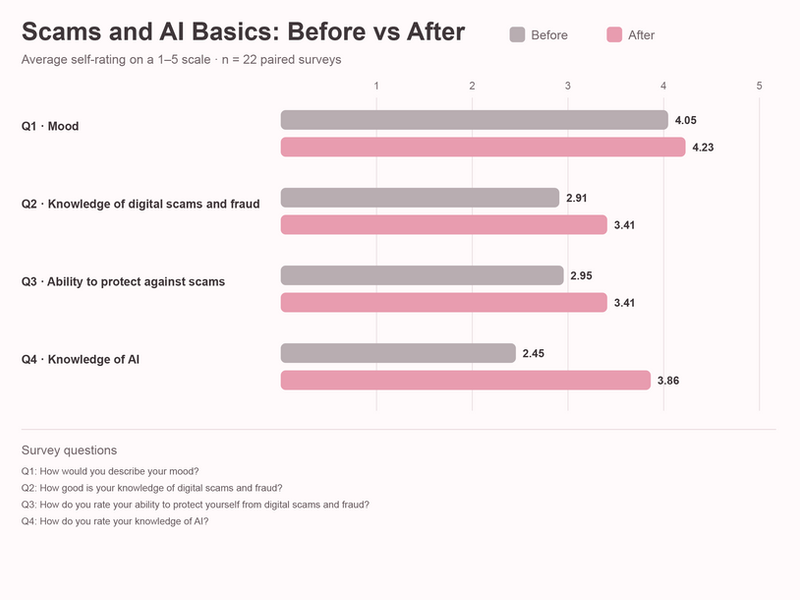
Last Survey of Class

Across four technology-education sessions for older adults, participants showed statistically significant increases in self-reported technology knowledge, practical ability, confidence, and safety awareness. The combined technology-related score increased from 2.69 before instruction to 3.48 afterward, with approximately 76% of participants demonstrating improvement. Particularly strong gains were observed in AI literacy and social-media safety knowledge. Participants also reported a small but significant immediate improvement in mood. In the final evaluation, all respondents rated the program positively and 100% expressed the highest level of interest in continuing technology education. These findings suggest that accessible, targeted technology education can improve older adults’ perceived digital competence and confidence while encouraging continued engagement with technology.